You accelerate on your dirt bike, but the engine sputters instead of revving up. This hesitation, often called bogging, indicates an imbalance between air, fuel, and spark when the engine is under the greatest load. Pinpointing exactly when the problem occurs helps you identify the right system without replacing parts at random.
When a dirt bike bogs: timing matters more than the symptom
Not all bogging is the same. The engine may hesitate as soon as you twist the throttle quickly, or only at a steady RPM when you maintain speed on the trail. These two situations don’t point to the same fault.
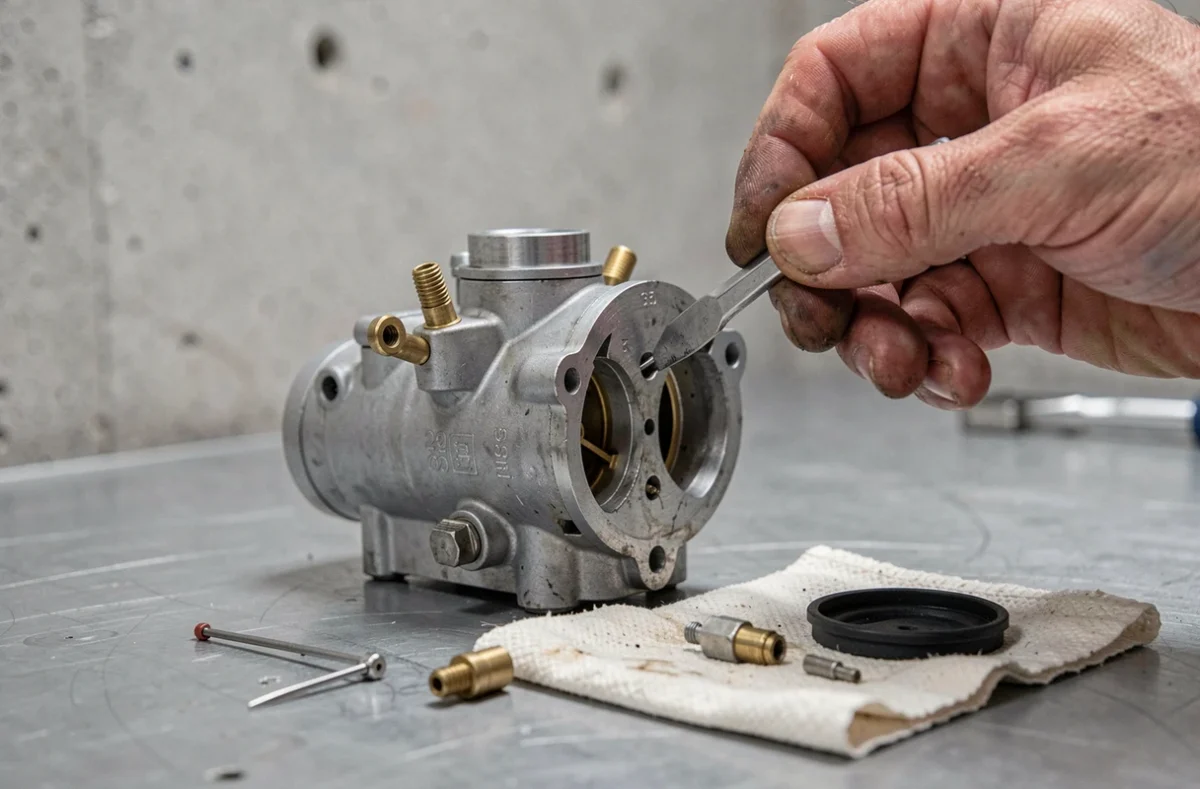
A stumble when you open the throttle quickly often points to the carburetor’s idle circuit or accelerator pump. This small pump delivers extra fuel to compensate for the sudden influx of air. If it isn’t working properly, the air-fuel mixture becomes too lean for a fraction of a second, and the engine coughs.
Bogging at mid to high RPM, on the other hand, may indicate a clogged main jet or an ignition problem. When diagnosing dirt bike bogging during acceleration, noting the exact conditions (cold or warm engine, throttle wide open or halfway) significantly narrows down the possible causes.

Intake air leak: the fault that mimics a carburetion problem
Before taking apart the carburetor or adjusting the jets, there’s one check to prioritize. An air leak at the intake boot throws off the entire diagnosis.
The intake boot is the rubber sleeve connecting the carburetor to the engine. On a dirt bike, vibration and heat eventually harden the rubber. Tiny cracks appear, invisible to the naked eye. Air enters through these cracks and leans out the mixture, even though the carburetor isn’t at fault.
How to find an air leak on a dirt bike
The simplest method is to spray a product such as brake cleaner around the boot-to-carburetor and boot-to-engine connections while the engine is idling. If the RPM suddenly changes, air is getting in at that point.
- Inspect the intake boot clamp: a clamp loosened by just a quarter turn can be enough to cause a leak
- Check the O-ring between the intake boot and cylinder head, especially if the dirt bike has accumulated many operating hours
- Examine the air-filter-side boot: a tear here lets unfiltered air in, which leans out the mixture and accelerates engine wear
Fixing an air leak before changing the carburetor settings prevents you from masking the symptom. Many riders richen the mixture to compensate, which hides the problem without solving it.
Valve clearance on a four-stroke engine: the quiet suspect
On dirt bikes with a four-stroke engine, persistent bogging can come from somewhere you might not think of right away: the valves. Insufficient valve clearance prevents the valves from closing fully, compromising the seal in the combustion chamber.
The result? The engine loses compression, becomes harder to start, and runs unevenly, especially during acceleration when the demand for power increases. The catch is that this fault doesn’t always produce a distinctive noise. An engine can have valve clearance outside the specified range without any audible ticking.
Checking valve clearance: a measurable procedure
Check the clearance with feeler gauges, with the engine cold, following the specifications in the model’s service manual. Each engine has its own tolerances. On a four-stroke dirt bike, this check is part of routine maintenance and should be performed at the intervals specified by the manufacturer.
If the measured clearance is below the minimum specification, the adjustment shims must be replaced. Riding with insufficient clearance accelerates valve seat wear and can lead to permanent loss of compression.
Dirt bike ignition and CDI: when the spark weakens
The ignition system is the third pillar of engine operation, alongside air and fuel. A fouled or worn spark plug is the most common cause of ignition-related bogging, but it’s not the only one.
The ignition coil can start to fail when hot. The engine starts normally and runs well for a few minutes, then begins to bog as the temperature rises. This heat-related behavior is a valuable clue: bogging that occurs only when the engine is hot points to the coil or CDI.
The CDI (electronic ignition module) controls spark timing. A faulty CDI can cause intermittent misfires, but bogging alone isn’t enough to identify it as the culprit. Before replacing it, rule out the more common causes first:
- Spark plug condition: a rounded electrode or oily black deposits indicate that it needs to be replaced
- Ignition coil resistance: this can be measured with a multimeter and should match the manufacturer’s specifications
- Wiring harness condition: a frayed wire or corroded terminal can cause brief interruptions in the spark
- Spark plug cap: an often-overlooked component that can develop excessive resistance as it wears
Replacing a CDI is expensive compared with replacing other ignition components. Rule out the spark plug, coil, and wiring before suspecting the CDI to avoid unnecessary expense.
Old fuel and storage: seasonal dirt bike bogging
A dirt bike left unused for several weeks with fuel in the tank is a prime candidate for bogging when it’s started again. Gasoline degrades: its volatile components evaporate, leaving behind a less combustible liquid that clogs the carburetor jets with varnish-like deposits.
In a carburetor, the pilot jet is affected first because it has the smallest opening. The result is an engine that runs poorly at low RPM and bogs during acceleration, just like a tuning problem. Draining the carburetor before extended storage, or using up all the fuel, is the most effective way to prevent this.
Dirt bike bogging always tells you something specific. The same symptom can come from the intake, valves, ignition, or fuel. The difference between a quick diagnosis and hours of trial and error comes down to one simple habit: observe when and how the engine bogs before touching anything.