
The French curriculum in 6e is based on four distinct skills, including language study. Printable grammar exercises are a common study tool for families, but how effective they are depends largely on how they are selected and used. The gap between traditional identification worksheets and the sentence-manipulation tasks recommended in official teaching materials is wider than it might seem.
Manipulating sentences before classifying them: what teaching materials recommend
Most exercise sheets available online focus on identification tasks: highlight a noun, circle a verb, or tick the correct grammatical category. These exercises have their place, but they cover only part of what is expected in grammar at Cycle 3.
The document La grammaire du français du CP à la 6e recommends having students work with language through practical operations. Moving, deleting, replacing or rephrasing groups of words helps students understand how a sentence works, rather than simply labelling its components.
An exercise that asks students to remove all the adverbial phrases from a paragraph, then put them back in a different order, develops syntactic understanding more than a multiple-choice quiz on word classes. The most useful printable worksheets include this kind of instruction, asking students to rewrite and transform sentences instead of ticking boxes.
To find printable grammar exercises for 6e that cover both identification and manipulation, check that the worksheets include at least two different types of instruction for the same concept.
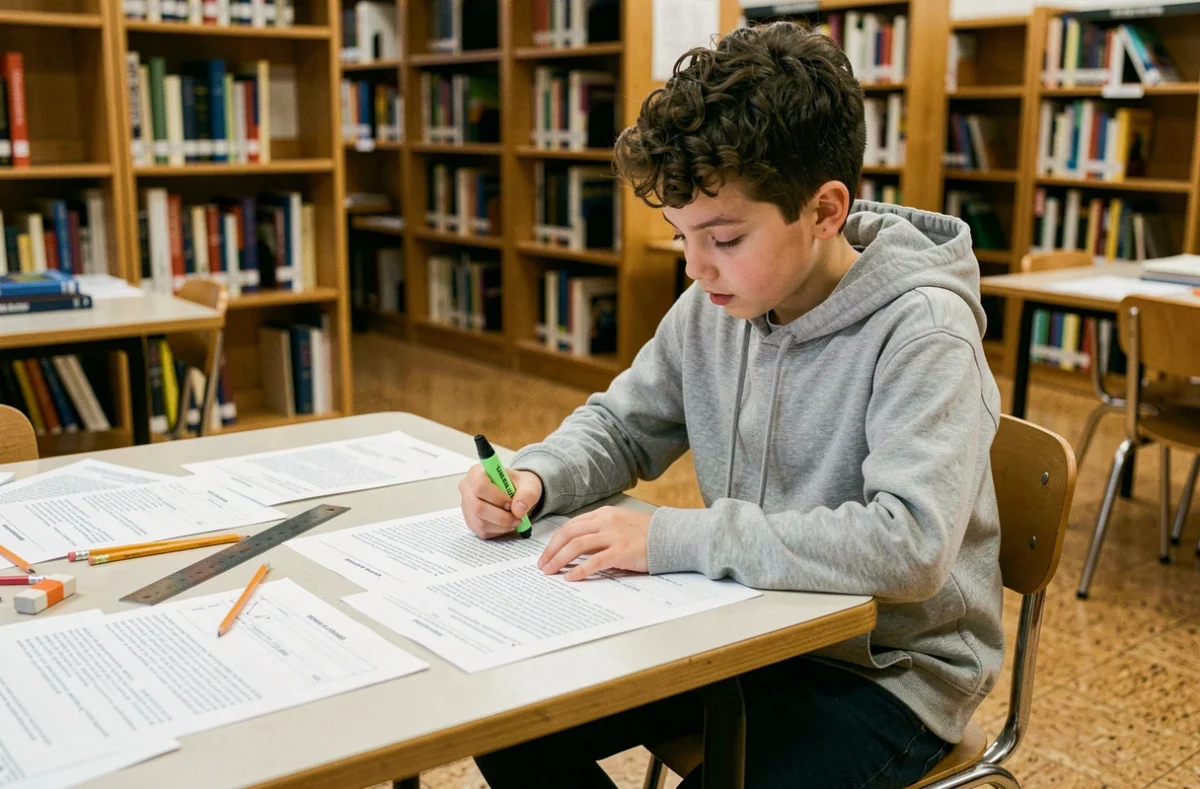
Progressive grammar exercises: from regular examples to syntactic pitfalls
A common flaw in printable worksheets is that they mix simple sentences with ambiguous cases in the same exercise. A student learning about the direct object finds themselves faced with a sentence in which the direct object is an embedded relative pronoun, even though they have not yet mastered the regular cases.
Teaching recommendations suggest starting with short sentences with regular structures to introduce each concept. Once students understand the mechanism, they move on to longer sentences, then to continuous texts where the concept appears in a less predictable context.
A practical example of progression with noun phrases
- First stage: identify the head noun in isolated noun phrases (“a cake”, “my neighbours”, “this long evening”), without a complete sentence around them
- Second stage: identify the subject noun phrase and the direct object noun phrase in simple sentences with just one conjugated verb
- Third stage: find the noun phrases in a short narrative paragraph, distinguishing those that function as subjects, objects or adverbials
- Fourth stage: rewrite the sentences by replacing some noun phrases with pronouns, then check that each sentence is still correct
This progression is not always reflected in free PDF worksheets, which often group together several difficulty levels without ranking them. Sorting exercises by complexity before printing them helps prevent students from struggling with a concept they have not yet mastered.
Detailed answer keys or simple answers: an overlooked difference
The presence of an answer key does not guarantee that students will understand their mistakes. A worksheet that simply says “answer: direct object” without explaining why the group of words serves this function leaves students with information they can memorise without understanding.
A useful answer key explains the process: it reminds students which question to ask about the verb, shows the pronoun substitution that confirms the function, or points out the trap in the sentence. One answer key that explains the reasoning is worth more than ten that simply give the answer.
Most free worksheets provide answer keys in the form of answer tables. A few educational or community websites offer annotated corrections, but they remain in the minority. When the answer key is brief, a parent can follow up by asking the student to explain their answer aloud, which also supports speaking skills—an area often overlooked in written exercises.
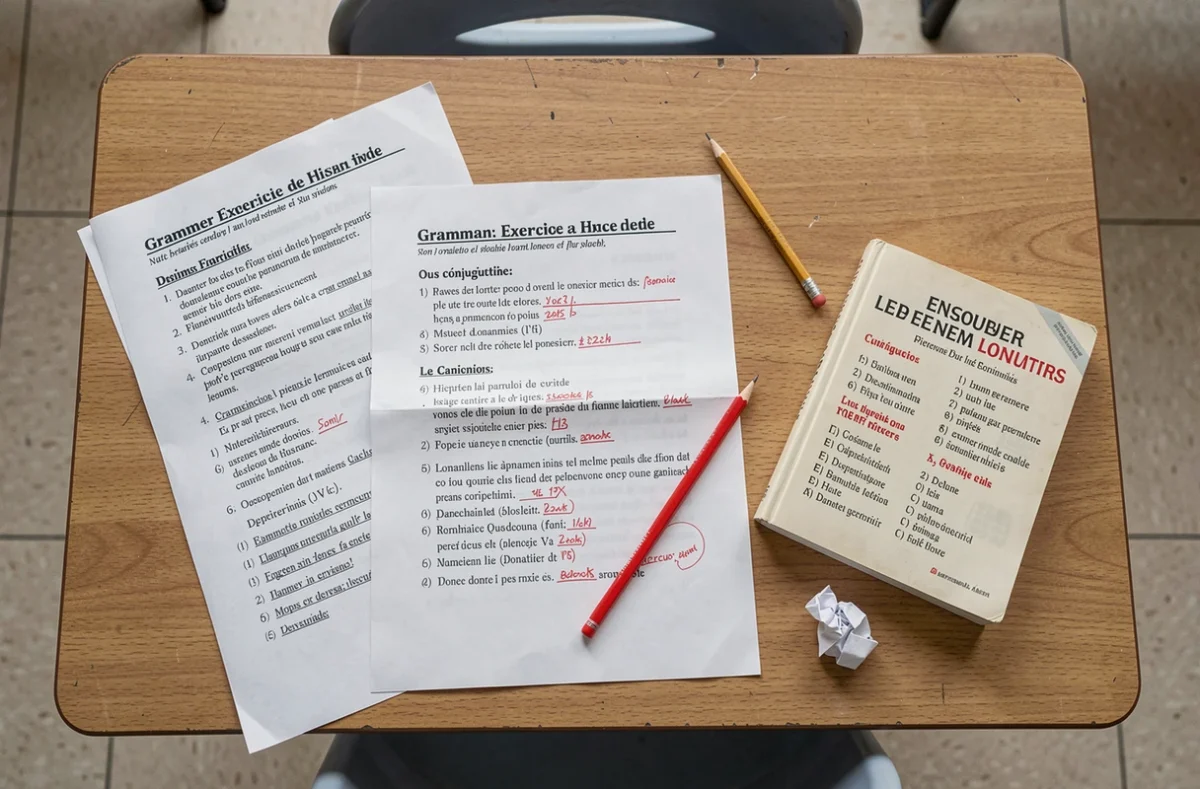
National 6e assessments and grammar exercises: keep their objectives separate
The national assessment at the start of 6e, scheduled for September, measures students’ skills as they enter secondary school. It does not focus solely on grammar, nor does it take the form of a traditional test on conjugation or grammatical categories.
Using grammar worksheets to “prepare” for this assessment is based on a misunderstanding. The national assessment is designed to identify each student’s needs, not to rank them according to their grammatical knowledge. It also covers reading comprehension and fluency.
What the national assessment can reveal to help guide learning
Assessment results help identify areas where students are struggling. A student who has difficulty with questions about agreement within noun phrases needs targeted worksheets on determiners, adjectives and agreement—not a general review of all grammar.
Waiting for the assessment results before putting together a set of printable exercises makes it possible to focus on the concepts that are genuinely challenging rather than reviewing everything. This makes study sessions shorter and more effective.
- If the student understands grammatical categories but confuses their functions, there is no need to revisit worksheets on word classes
- If subject–verb agreement is a problem, isolated conjugation exercises (tables of verb endings) will not be enough: students need sentences where they first have to identify the subject
- If reading comprehension is the main weakness, sentence-level grammar will not address it; the issue is more closely related to vocabulary and reading
Printable grammar worksheets cover part of the French curriculum in 6e, not all of it. Paper-based exercises work well for identification and syntactic transformation, but less well for speaking activities or extended writing. Choose worksheets that get students working with language, organise them by increasing difficulty, and check that the answer keys explain the reasoning: these three criteria are enough to distinguish productive practice from a pile of printed pages.