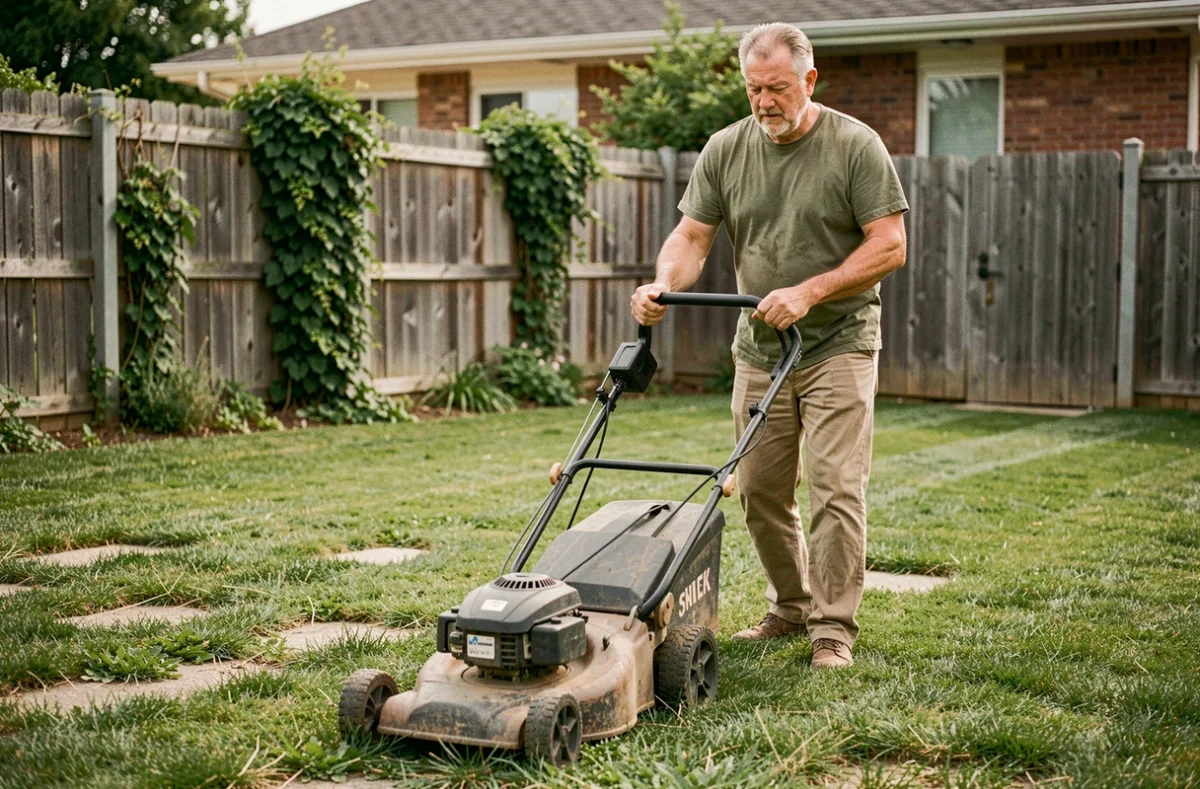
An 80 m² plot with a gentle slope and fine ryegrass doesn’t need the same motor as a flat 500 m² lawn overrun with clover and daisies. The power of an electric lawn mower should be chosen based first on what the grass puts in the blade’s way—not on a round number printed on the box.
Understanding what lies behind the stated watts or volts helps you avoid two common mistakes: a motor that overheats in long grass, or an oversized model that costs more without offering any real benefit.
Stated wattage and actual cutting power: what the spec sheet doesn’t tell you
For a corded mower, power is measured in watts. Models range from 1000 W for entry-level options to 1800 W and above for more robust versions. The catch is that this figure refers to the power drawn by the motor, not the power that actually reaches the blade.
Some energy is lost as heat and friction in the drive mechanism. So two mowers with the same stated wattage can deliver very different cutting performance, depending on motor quality, transmission type and blade design. If you want to choose a powerful electric lawn mower, it’s best to compare the stated power with the cutting width and user feedback on how it handles long grass.
Battery-powered mowers work differently. Their specifications use volts (battery voltage) and amp-hours (capacity). Voltage determines the motor’s torque, and therefore its ability to keep running in dense grass. A 36 V battery or higher is suitable for medium-sized lawns and tough grass, while an 18 V battery is enough for a small garden that’s mowed regularly.
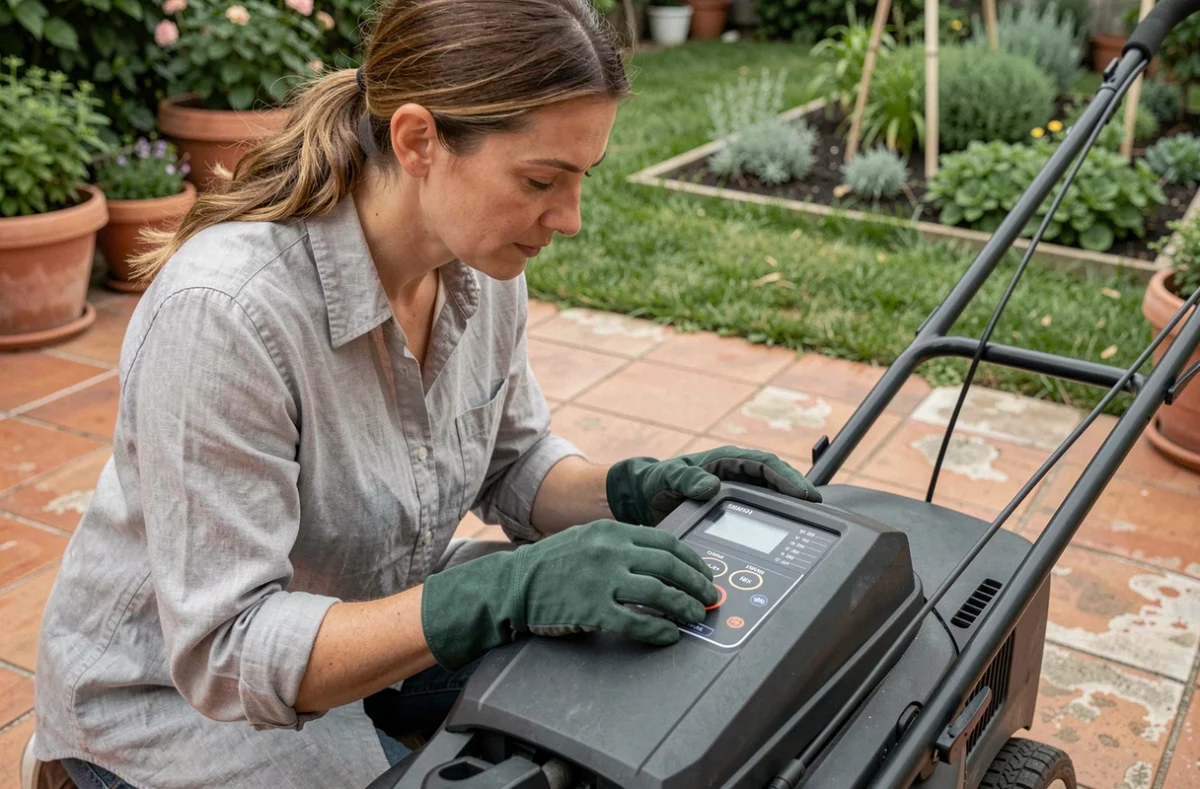
Electric lawn mower power by lawn size
Lawn size is still the most reliable starting point for choosing the right motor power. This isn’t an absolute rule, but it provides a useful guide to help you avoid choosing the wrong size.
Small lawn, frequent mowing
For a city garden or a small patch of lawn measuring a few dozen square metres, mowed every week, a corded motor rated at around 1000 to 1300 W will do the job without straining. The grass stays short, and the blade encounters little resistance. For a battery-powered mower, an 18 V model with a narrower cutting width offers the same ease of use.
Medium-sized lawn with uneven areas
Once the lawn covers a few hundred square metres or includes shaded areas where the grass grows thicker, a 1400 to 1600 W corded motor becomes the comfortable minimum. For a battery-powered model, step up to 36 V to maintain sufficient torque throughout the mowing session.
Large lawn or thick grass
For lawns over 500 m² or thick, hardy grass, 1800 W corded mowers and 36 V battery models with brushless motors come into their own. Brushless motors reduce internal energy losses, resulting in more consistent torque and longer runtime for the same battery capacity.
Cutting width and cutting height: power’s natural partners
Buying a powerful motor without considering the cutting width is like putting a big engine in a narrow vehicle. The two specifications work together.
- A cutting width of 32 to 38 cm is suitable for small lawns and narrow paths between flower beds. It pairs well with a 1000 to 1300 W motor.
- At 40 to 46 cm, you cover more ground with each pass, reducing mowing time on medium-sized lawns. A 1400 to 1600 W motor can handle this width without slowing down.
- Above 46 cm, the blade needs high torque to maintain a clean cut across its full length. This is where 1800 W and higher models, or 36 V battery models with brushless motors, come in.
Adjustable cutting height also plays a role. Cutting the grass very short (below 3 cm) puts more strain on the motor than keeping the lawn at 5 cm. If the garden has sloping areas or raised borders, a central cutting-height adjustment makes each pass easier without straining the mechanism.
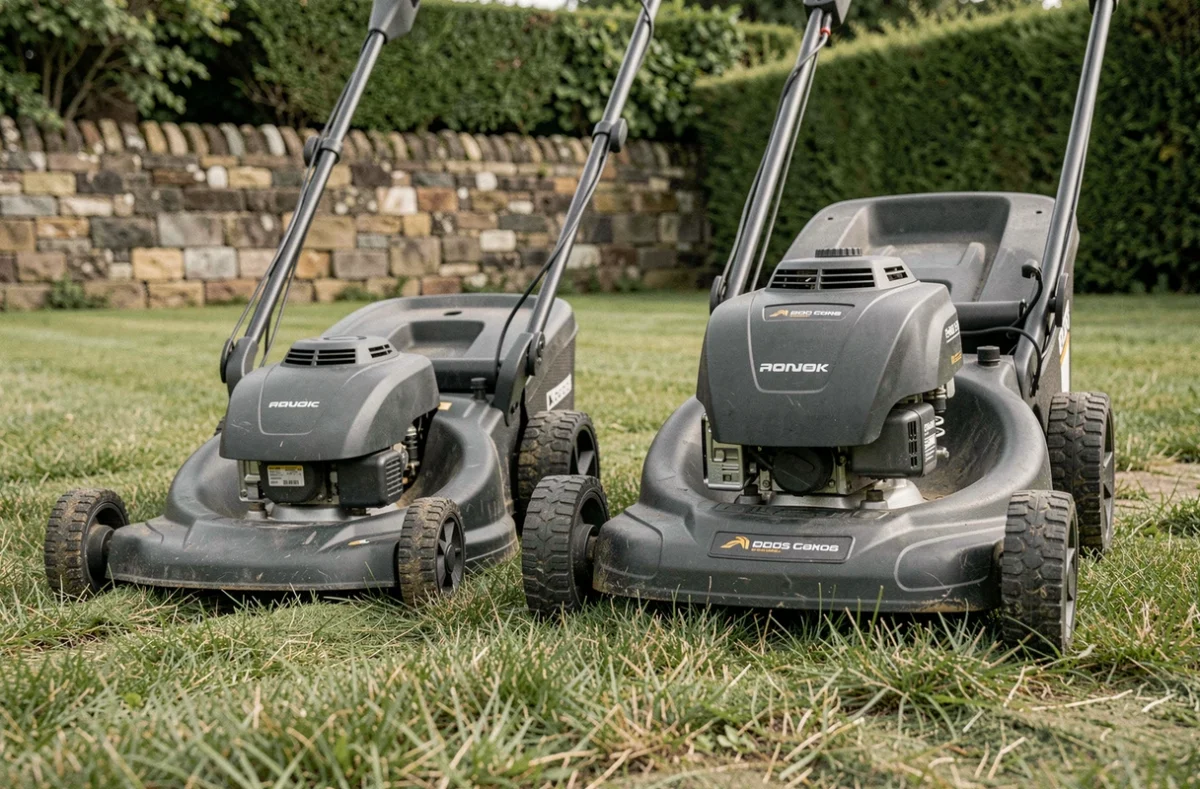
Corded or battery-powered: power isn’t the only practical consideration
Choosing between a corded and a battery-powered mower isn’t just a matter of comparing watts and volts. In practice, the main drawback of a corded mower is the cable. Once the garden extends beyond a certain distance from the power outlet, you’ll need an extension lead, and the cable can get in the way around trees, flower beds and garden furniture.
A battery-powered mower eliminates this issue but comes with limited runtime. On a complex lawn, actual runtime depends as much on the type of grass and the terrain as on the stated capacity. A sloping lawn or long grass will drain the battery faster than a flat lawn with fine grass.
- Corded mowers remain a good choice for compact gardens close to a power outlet, where consistent power outweighs the inconvenience of the cable.
- Battery-powered models are better suited to larger or divided-up lawns, provided the runtime is enough to mow the entire area on a single charge.
- Some manufacturers offer batteries that work with several garden tools, such as hedge trimmers and leaf blowers, reducing the overall cost of your equipment.
One often-overlooked factor is noise level. EU regulations require the guaranteed sound power level to be displayed near the CE marking. Comparing this figure can help you choose between two models with similar power, especially in a garden with close neighbours, where mowing noise can become a real source of friction.
Before buying, start with three practical details: the actual lawn area, the type of grass growing there and how often you plan to mow. A motor properly matched to these three factors will last longer, use less energy and cut better than a model chosen solely because it has the highest figure on the spec sheet.