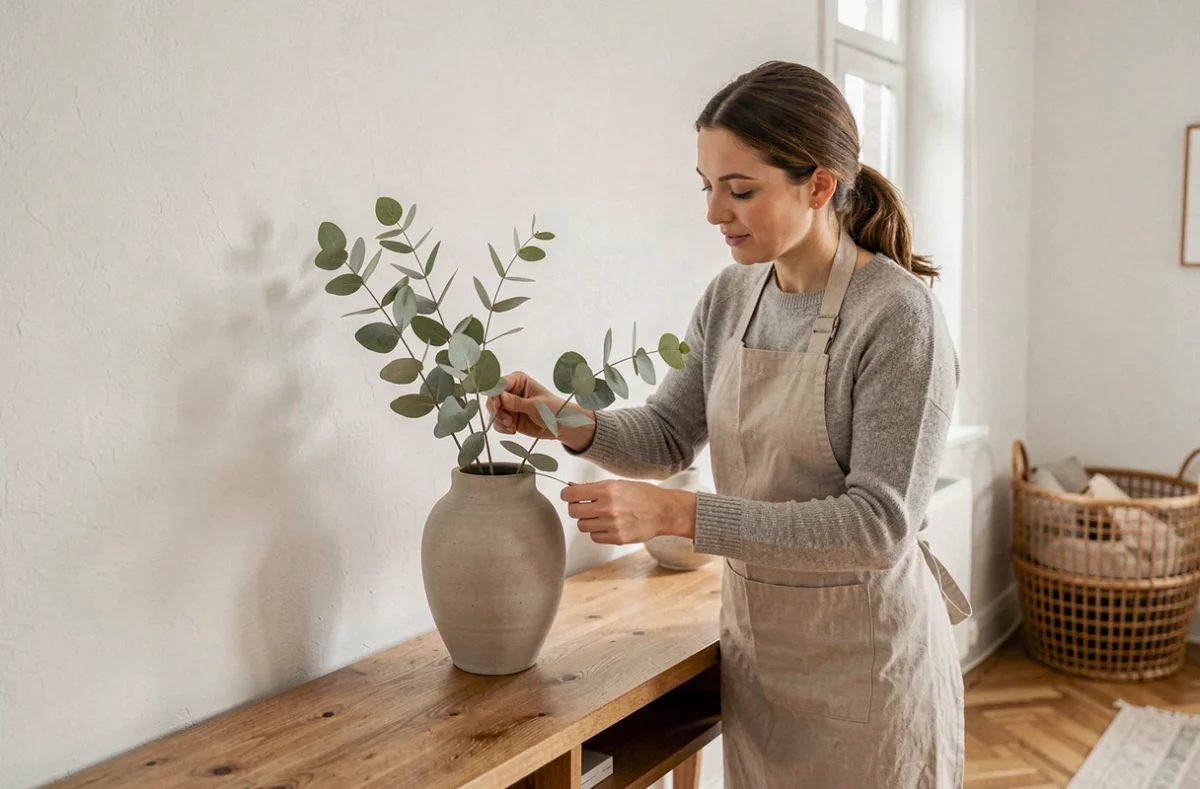
A sofa that’s too big for the living room, a kitchen where you bump into things at every meal, a bedroom that always seems cluttered: these everyday situations rarely stem from a lack of square meters. They arise from a layout that doesn’t match how we actually live at home. Decorating and arranging your home starts with observing your habits, then adapting each room accordingly.
Indoor air quality and furniture choices: the invisible criterion
Have you ever noticed that persistent smell when a new piece of furniture arrives at home? It’s not trivial. New furniture, paints, and certain coatings emit volatile pollutants that accumulate in the ambient air, especially in the absence of ventilation.
The Ministry of Ecological Transition recommends ventilating for at least 10 minutes a day and allowing new furniture to air out in a well-ventilated space before placing it in a living area. In practical terms, a flat-pack sideboard would benefit from staying a few days in an open garage or near a wide-open window.
This reflex changes the way you plan a layout. Instead of installing everything in the same weekend, it’s better to stagger the arrival of furniture, open the windows wide between each step, and avoid adding fresh paint, new flooring, and recent furniture all at once. You can find many ideas for organizing these steps in the home section on Tip Top du Web, where practical topics related to housing are gathered.
Scented candles and certain household products also contribute to this indoor pollution. Reducing their use or replacing them with alternatives free of volatile organic compounds significantly improves the air we breathe, without changing the decor.
Arranging your home with summer comfort in mind
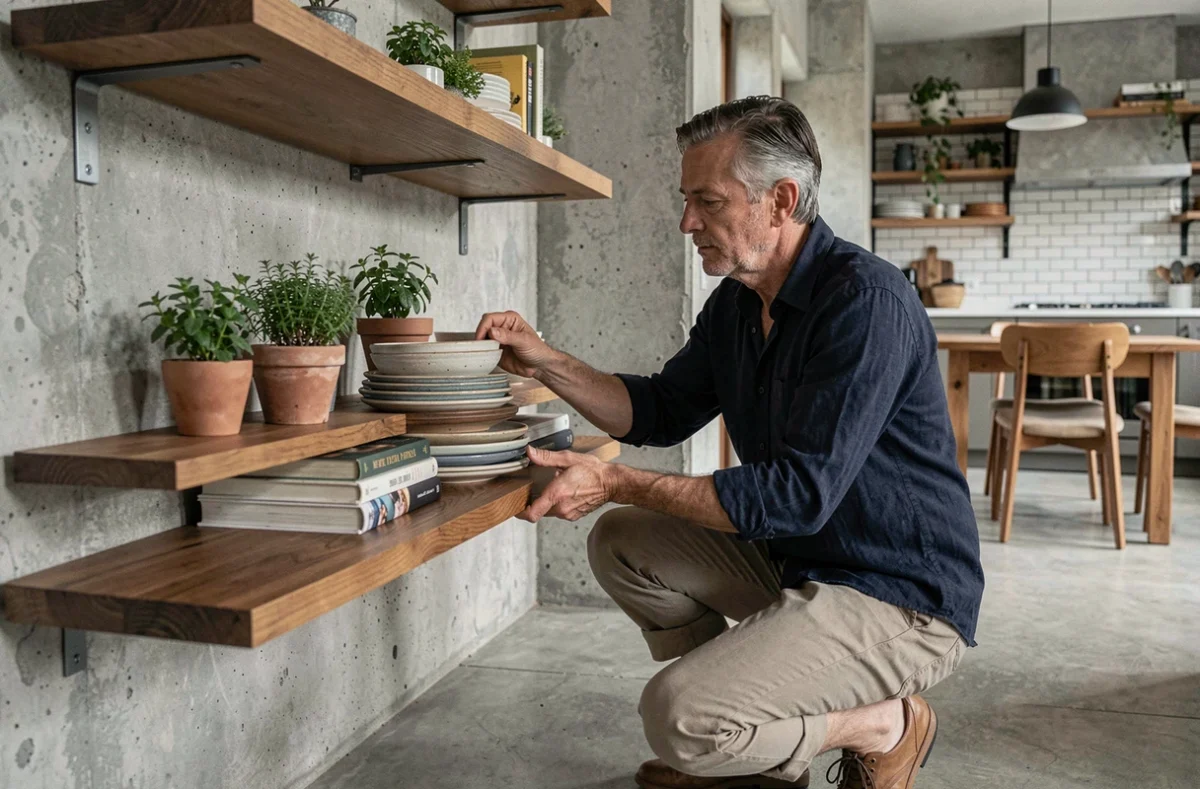
Interior design is often thought of for winter: warm colors, thick textiles, soft lighting. Episodes of intense heat change the game. The environmental regulation RE2020 has introduced an indicator of discomfort degree-hours for new constructions, proving that summer thermal comfort is becoming a recognized issue.
For existing homes, which are less regulated in this regard, a few decoration and layout choices make a real difference.
- Solar protections (outdoor blinds, adjustable slat shutters, solar films on glazing) block heat before it enters the room, whereas an interior curtain merely redistributes it.
- The organization of living spaces matters: a room facing west, exposed to the afternoon sun, struggles with a sofa pushed against the bay window in July. Shifting the living area towards the coolest part of the room changes comfort without renovation.
- The materials of the flooring play a direct role. Tiles or stone remain cool underfoot, while thick carpet retains the heat accumulated during the day.
Treating decoration and thermal comfort together avoids making the same choices twice. A well-chosen blind can also become a decorative element, just like a curtain.
Storage and circulation: adapting each room to its true uses
The most common mistake in a living room or bedroom is placing furniture against the walls by reflex, as if the central space should remain empty. The result: the room appears larger, but circulation is often illogical, and storage is lacking where it’s needed.
Living room and living space: thinking in zones
A living room works better when it’s divided into usage zones. The sofa can serve as a separator between a reading nook and a TV area, without resorting to a partition. A low piece of furniture placed perpendicular to the wall creates a visual boundary while offering storage on both sides.
For an open kitchen, an island countertop or a rolling cart is enough to mark the transition between the preparation area and the dining space. The goal is not to partition but to give each activity a clear perimeter.
Bedroom and bed: the question of vertical storage
In a bedroom, the bed occupies most of the floor space. Instead of adding furniture around it, it’s more effective to exploit the height. Shelves mounted above the headboard, a wall-mounted rack, or suspended boxes free up the floor without reducing storage volume.
The space under the bed remains the most underutilized storage in most bedrooms. Flat drawers or rolling boxes fit there and declutter the wardrobe.
Age-friendly design: anticipating without sacrificing decoration
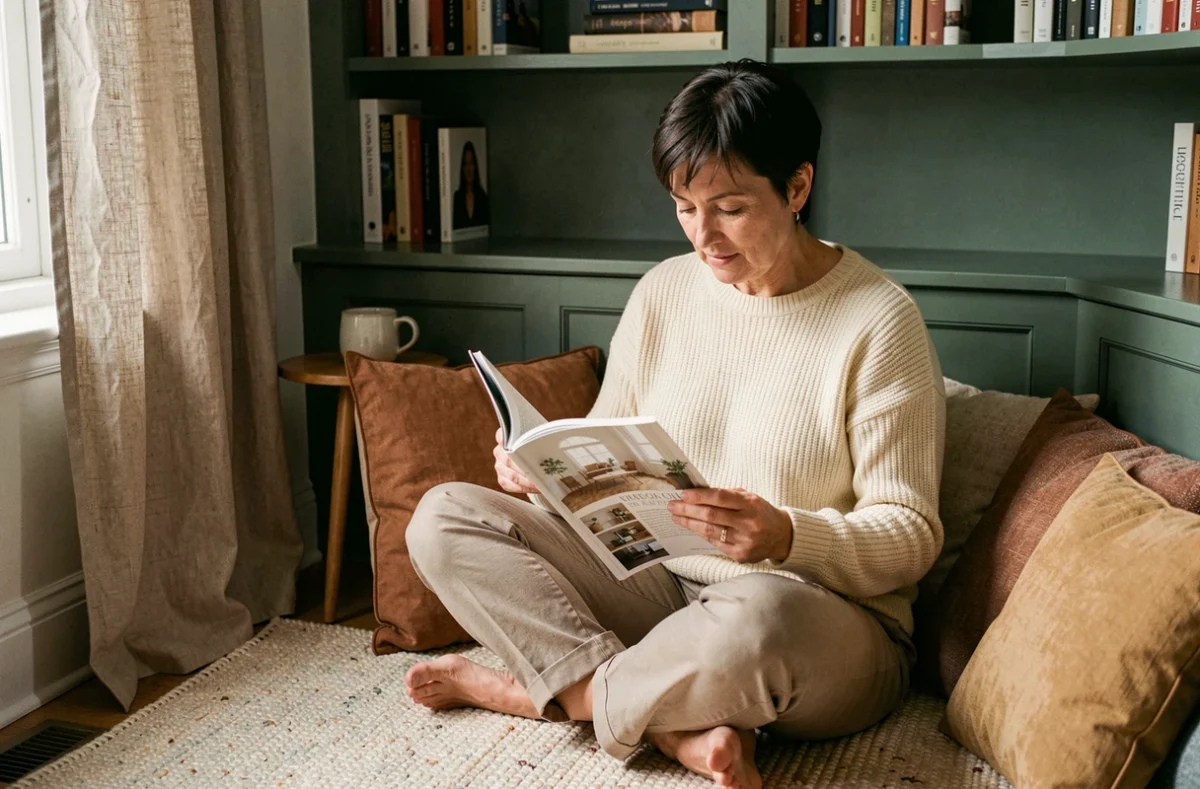
This topic concerns all homes, not just those of elderly people. A design intended to last incorporates elements from the start that facilitate life as mobility evolves.
A walk-in shower replaces the bathtub without aesthetic loss. Non-slip floors come in very varied finishes (wood imitation, polished concrete, natural stone). Motion-sensor lighting in hallways eliminates the need to search for a switch at night, benefiting everyone, including children.
Eliminating cables on the floor, securing rugs with adhesive strips, installing discreet handrails along a staircase: these adjustments are as much about safety as they are about daily comfort. A good interior layout is not visible; it is felt when everything works effortlessly.
Natural light and colors: two levers that transform a space
Before repainting a wall or changing a light fixture, observe how light enters each room throughout the day. A dining room lit from the east benefits from morning sunlight: light shades on the walls amplify this light. A north-facing living room benefits from warm colors that compensate for the lack of direct brightness.
Adapting the color palette to the actual orientation of the room produces a more pronounced effect than any decorative accessory. A pure white in a poorly lit room appears gray. A warm beige in the same room appears bright.
For windowless spaces (entryway, hallway, interior bathroom), a mirror placed facing the nearest light source doubles the perception of depth. This is not a decorator’s secret; it’s applied optics in daily life.
Each room in the house tells the story of how we live there. The most sustainable layout choices are those that stem from actual use, not from a photo spotted on social media. A well-placed piece of furniture, a wall repainted in the right shade, a storage solution added in the right spot: these simple actions, repeated room by room, transform an interior more surely than a complete renovation.