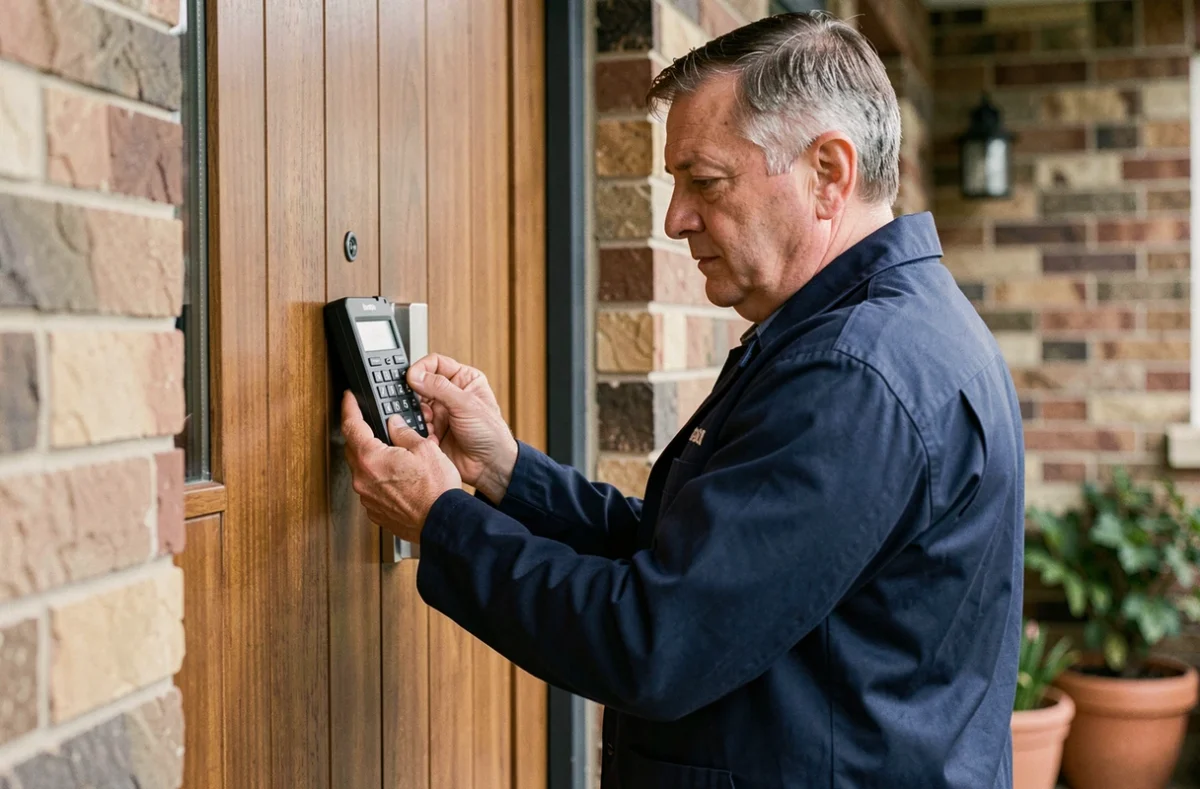
Mechanical keypad locks operate without batteries, connections, or software. Their principle is based on a combination of physical keys that directly actuate the bolt. This purely mechanical operation attracts both individuals and managers of professional premises, but choosing a suitable model requires looking beyond mere practicality.
EN 12209 Standard and Mechanical Keypad Lock: What the Material Doesn’t Say
Most product sheets highlight the material of the casing (stainless steel, zamak, steel). This criterion matters for weather resistance, but it does not inform about the actual security level of the mechanism.
The European standard EN 12209 governs the performance of mechanical locks: durability, corrosion resistance, behavior under stress. Before purchasing, check if the manufacturer declares compliance with this standard and, if applicable, the grade obtained. A brushed stainless steel model without any normative reference may offer less assurance than a steel casing classified according to EN 12209.
Browsing Serrurier Dic’s tips, this logic is evident: the material alone is not enough to establish the reliability of a mechanical code lock.
Wear of Keys and Code Security: The Real Weak Point
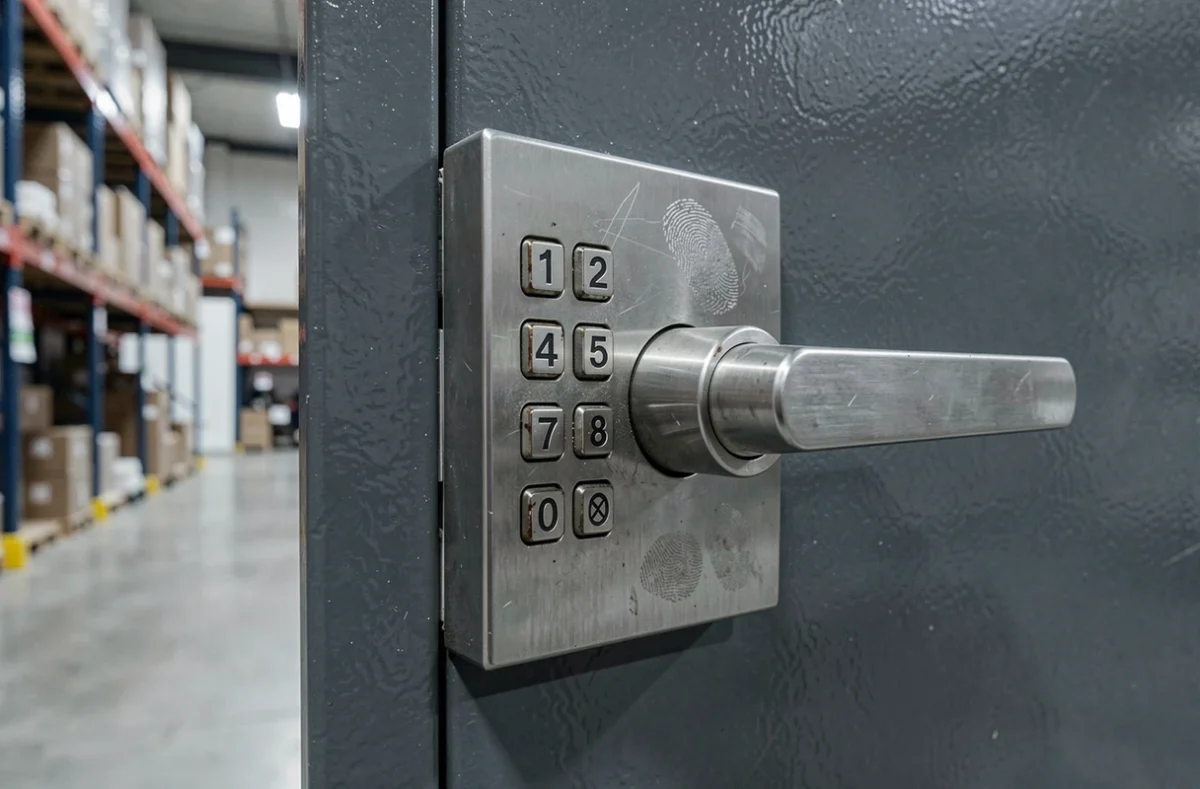
A mechanical keypad has no battery to replace or updates to install. This simplicity is its main structural advantage. However, it comes with a vulnerability that is often underestimated.
Visible wear of the keys can reveal the digits of the code. On a model used daily by several people (residential, community space, office), the most frequently pressed keys eventually stand out from the others by their appearance or feel. An attentive observer can then significantly reduce the number of possible combinations.
Two precautions can limit this risk:
- Change the combination regularly, at least every three to six months in collective use, to distribute wear across the entire keypad.
- Prefer a model with replaceable keys or one whose surface is treated to limit signs of use.
- Use a code of at least five digits, without obvious sequences (birth dates, logical sequences), to compensate for the inherent weakness of a physical keypad.
The reliability of the mechanism and the security of the code are two distinct matters. A robust mechanical keypad protects against malfunctions, not against a poorly chosen or never-renewed code.
Mechanical Keypad Lock in ERP: Accessibility Constraints
If the lock is installed in a business, a liberal office, or any other establishment open to the public, the choice of model is no longer solely about comfort. Control devices must be identifiable, accessible, and operable without excessive effort.
A keypad placed too high, with keys that are difficult to visually distinguish or require significant pressure, can pose a compliance issue. Field feedback varies on this point: some mechanical models with large keys are suitable, while others require a striking force incompatible with accessibility requirements.
Points to Check Before Installation in ERP
The height of the keypad installation must allow for use in a wheelchair. The keys must offer sufficient visual contrast and a perceptible tactile feedback. Any modification of an ERP (installing a code lock on an access door, for example) may require authorization from the town hall.
These constraints sometimes lead to choosing a model with wider keys or a remote positioning of the casing, which affects the budget and the complexity of the installation.
Incorporated or Remote Locking: Choose According to Use
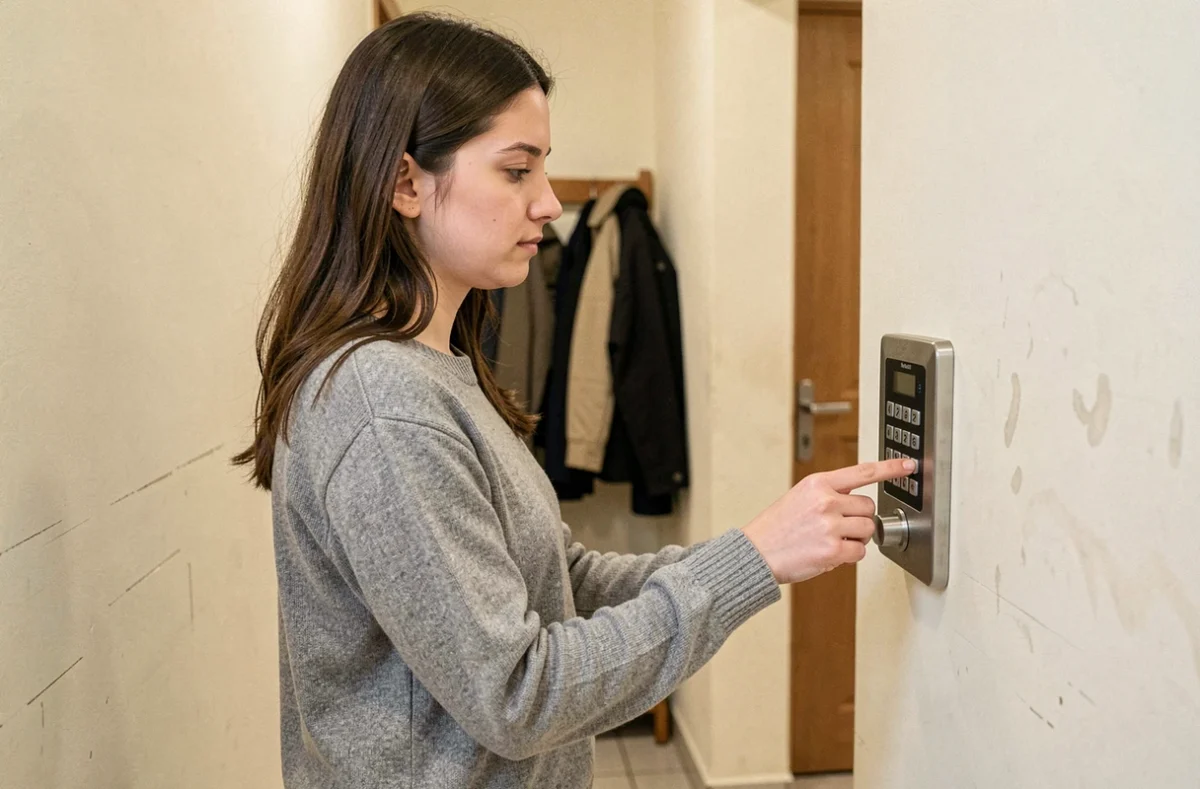
Mechanical keypad locks come in two main families based on the locking mode. This technical distinction directly influences installation and use cases.
The incorporated locking integrates the bolt within the same casing as the keypad. The entire unit is mounted on the door as a single block. This format is suitable for lightweight doors, garden gates, or technical cabinets. Installation is quick, but resistance to forced entry remains limited by the compactness of the mechanism.
The remote locking separates the keypad from the locking mechanism. The keypad casing controls a distinct lock, often more robust, fixed within the thickness of the door. This setup is necessary for entrance doors of buildings, access to professional premises, or fire doors.
The choice between these two configurations depends on three parameters:
- The weight and thickness of the door (a heavy metal door requires remote locking).
- The level of daily use (frequent passage wears out a compact incorporated mechanism faster).
- The need or not to combine the code lock with an existing locking system (multi-point lock, electric strike).
Maintenance of a Mechanical Code Lock: What Prolongs Its Lifespan
The absence of electronics simplifies maintenance but does not eliminate it. A mechanical keypad exposed to the elements or intensive use accumulates dust, debris, and micro-oxidation in the mechanism.
Cleaning the keypad and lubricating the bolt once or twice a year is sufficient in most cases. Use a dry lubricant (graphite or Teflon), never thick grease that would attract dust inside the mechanism.
Also periodically check the proper alignment of the bolt with the strike plate. A slight misalignment, due to door settling or thermal variations, can force the user to press harder on the keys, accelerating the wear of the keypad.
Replacing individual keys, when offered by the manufacturer, costs little and brings the keypad back to standard without changing the entire system. This detail, rarely mentioned at the time of purchase, makes a significant difference in longevity between an economical model and one that is truly durable.