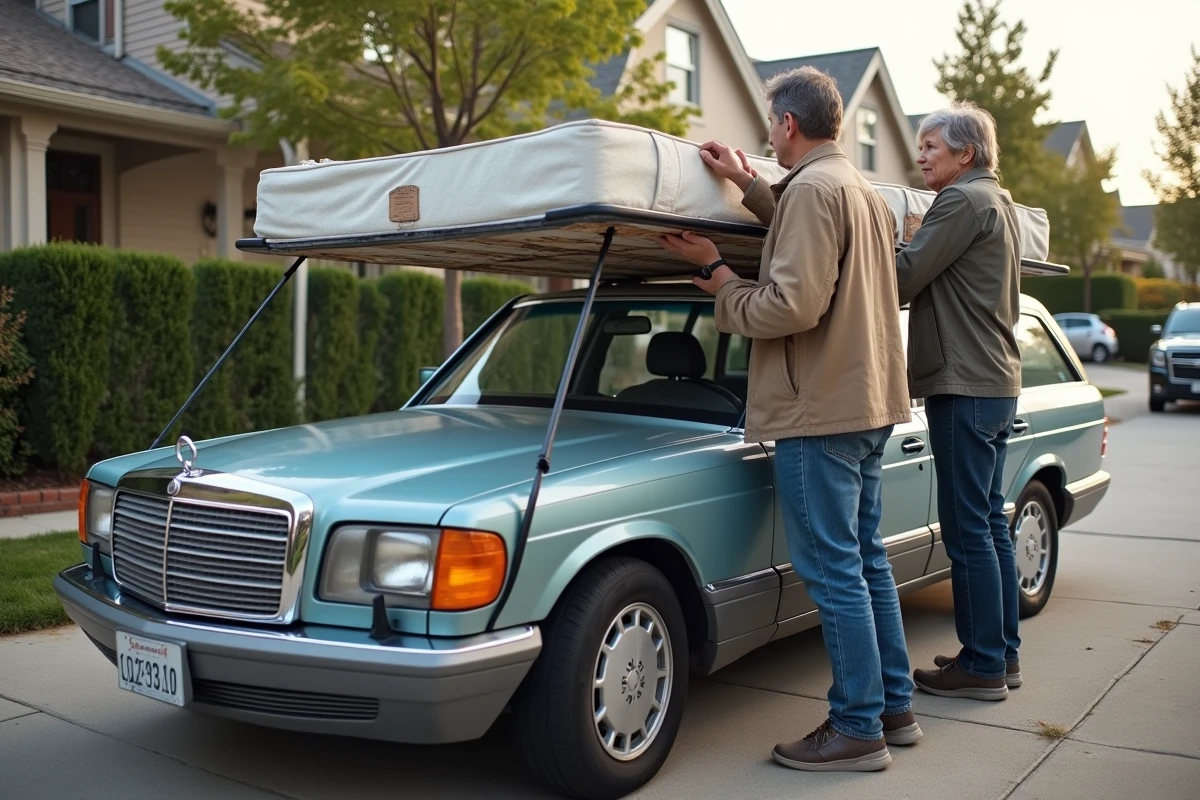
Transporting a bed base on a private car presents a concrete problem: the object is rigid, bulky, and often wider than the vehicle. Moving guides mainly focus on the mattress, which is softer and easier to handle. The bed base, however, requires specific precautions for securing, protecting, and driving. Here are ten practical tips to carry out the operation without damage or violation.
1. Identify the type of bed base before any handling

An open-lathe bed base does not react the same way as a box spring or a model with pocket springs. The former can be easily disassembled, the second risks tearing the fabric with the slightest friction, and the third is significantly heavier.
Before taking out your bed base, flip it over to identify its structure. A frame with removable slats reduces to a simple flat chassis once the slats are removed. A box spring, on the other hand, remains monobloc and requires reinforced textile protection. Adapting the method to the type of bed base avoids most damage.
If you are looking for tips for transporting a bed base in a car, this first step conditions all the following ones.
2. Disassemble everything that can be disassembled

A slatted bed base can be separated in a few minutes with a screwdriver. Remove the slats, end caps, and legs, then group the screws in a labeled bag. The frame alone often lies flat on a standard roof rack.
For a non-dismantlable box spring, check if the manufacturer has provided folding hinges. Some recent models fold in half, which halves the bulk and simplifies passage through stairwells.
3. Protect the bed base with a suitable cover

A thick plastic moving cover protects the fabric from rain, road dust, and friction against the roof bars. This point is often overlooked, while moisture absorbed during transit promotes mold and dust mites in the weeks that follow.
If a specific cover is unavailable, a tarp secured with wide adhesive tape will do the trick. Also cover the corners with folded cardboard: these are the areas most exposed to shocks and abrasion.
4. Use ratchet straps instead of rope

Rope slips, loosens with vibrations, and does not maintain constant tension. Ratchet straps provide progressive and locked tightening that does not move during transit.
Plan for at least two straps passed across the width of the vehicle, plus a third along the length to prevent any sliding forward during braking. Pass each strap through the cabin, with doors open, wedging it in the door frames.
5. Place the bed base flat, never on its edge
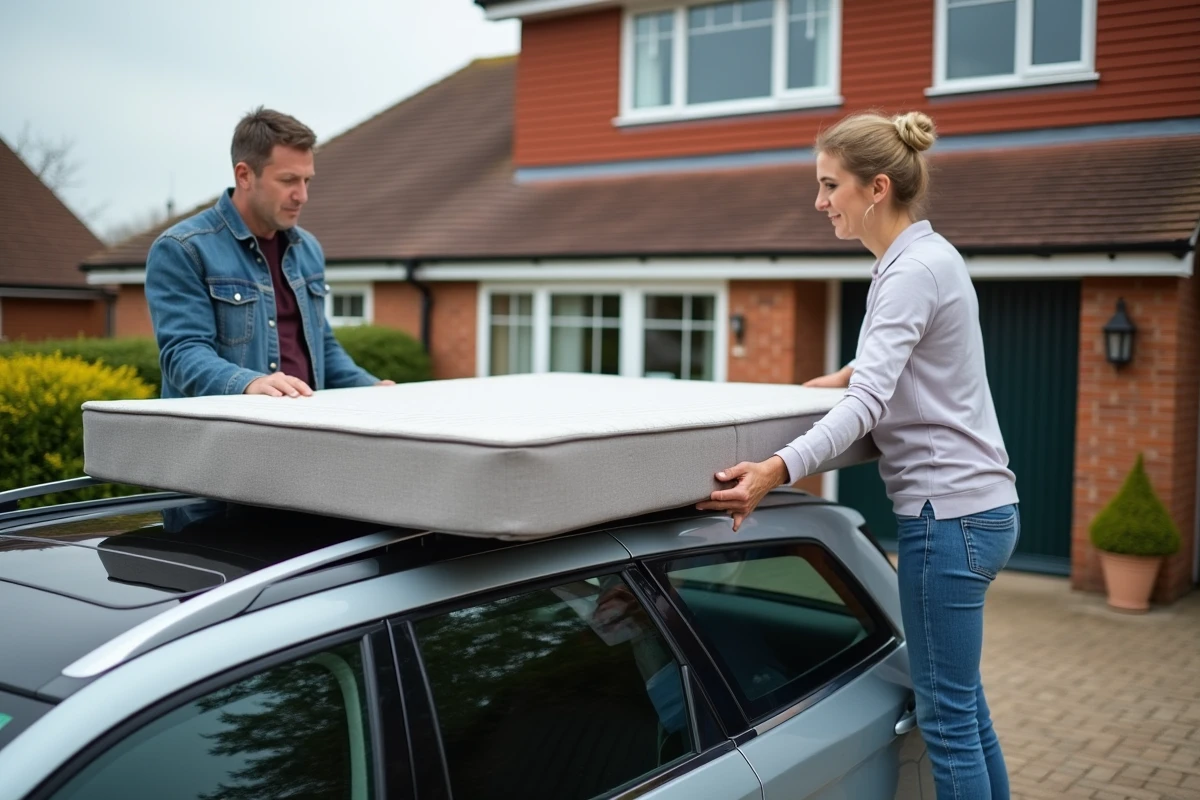
Placing a bed base on its edge increases wind resistance and shifts the center of gravity upward. The risk of tipping becomes real as soon as the speed exceeds that of an urban area.
A bed base placed flat distributes its weight over the entire support surface and reduces aerodynamic drag. If your roof rack is too narrow, adjustable crossbars widen the contact area.
6. Check the roof load capacity

Every vehicle has a maximum authorized load on the roof, indicated in the maintenance booklet or on the roof rack label. Exceeding this weakens the roof structure and compromises road handling.
A box spring with springs weighs significantly more than an empty slatted frame. Weigh your bed base or consult the manufacturer’s product sheet before lifting it. If the weight exceeds the limit, transporting it in a trailer or rental van remains the only safe option.
7. Add a non-slip blanket between the bed base and the roof
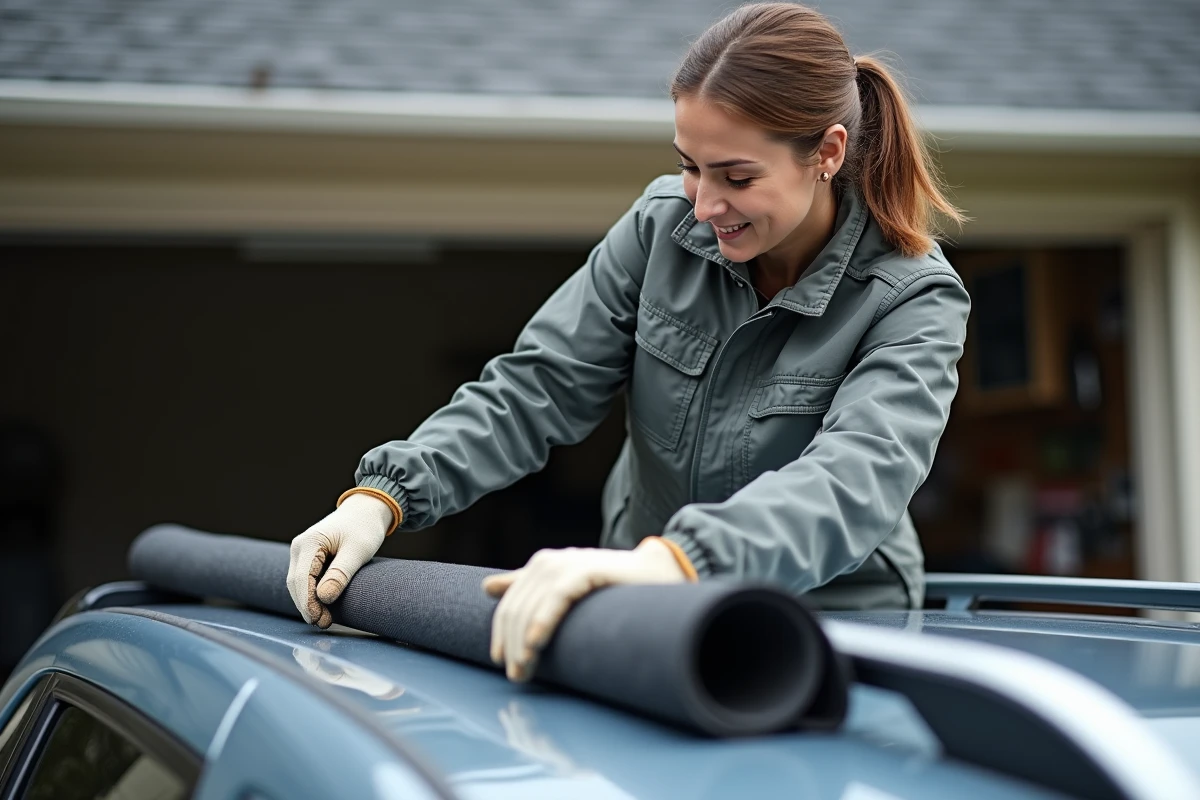
An old blanket or a non-slip mat placed between the roof bars and the bed base serves two functions: it prevents lateral slipping and protects the vehicle’s paint from scratches.
Without this interface, road vibrations turn each metal bar into an abrasion zone. In just a few dozen kilometers, the fabric of the bed base can puncture, and the roof paint can scratch.
8. Follow the securing rules of the Highway Code

The French Highway Code requires that all loads be secured in a way that does not obstruct driving or visibility. A bed base extending more than one meter beyond the rear of the vehicle requires a signaling device (panel or visible red fabric).
Failure to comply with these rules exposes you to a fine. Also check that the bed base does not obscure the rear lights, turn signals, or license plate. A quick check before departure is enough to avoid these violations.
9. Adapt driving to the modified size of the vehicle

With a bed base on the roof, the total height of the vehicle increases. Underground parking, height-restricted tolls, and certain under-bridge passages become real obstacles.
Reduce your speed and increase braking distances. Lateral wind resistance alters the vehicle’s behavior, especially on highways or in crosswinds. Prefer secondary roads and calm time slots.
10. Call on a partner for loading and unloading
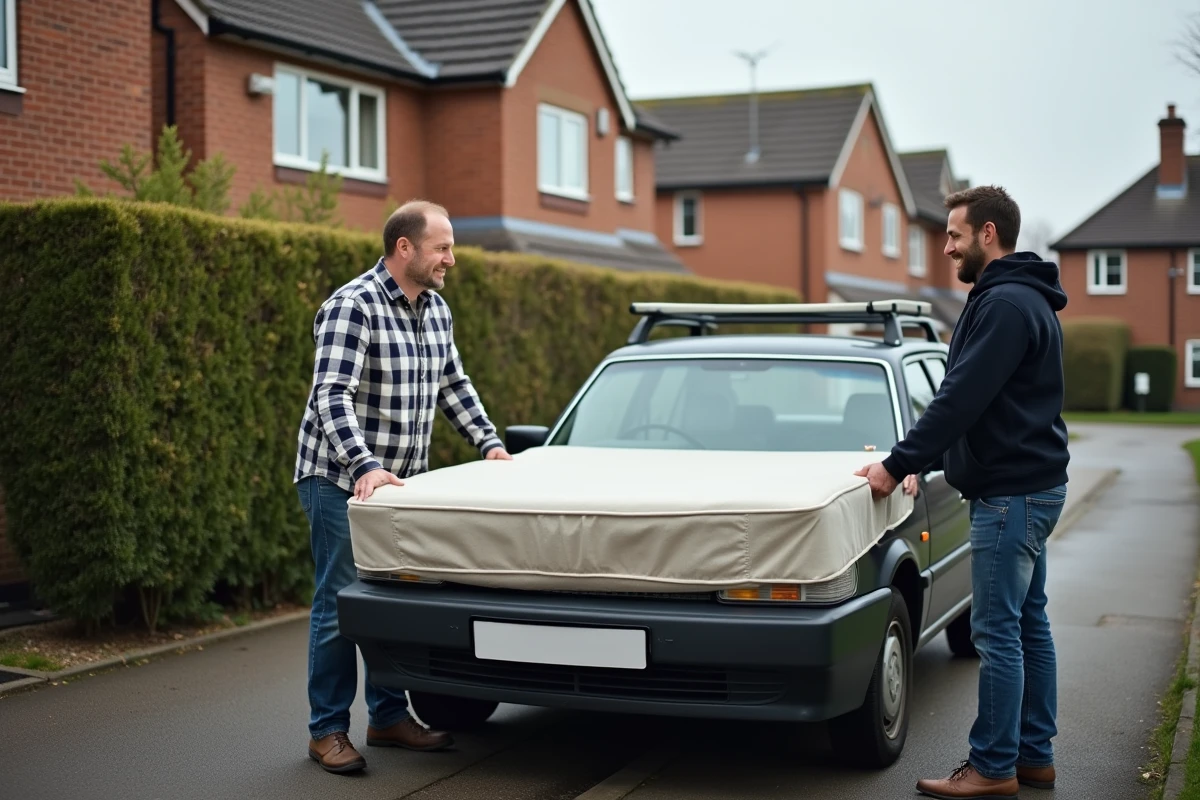
Lift a bed base alone exposes you to muscle strain in the back and shoulders. The weight, combined with the bulk, makes the grip unstable and lifting onto the roof risky without help.
Two people are enough: one holds the bed base steady while the other guides the placement and secures the straps. This precaution also reduces the risk of dropping the bed base onto the vehicle and damaging the windshield or roof.
Transporting a bed base on a car remains feasible as long as you prepare each step: identifying the type of bed base, disassembling if possible, protecting against moisture, securing with ratchet straps, and adapting your driving. The most underestimated point remains checking the maximum roof load, which conditions the feasibility of the operation itself.