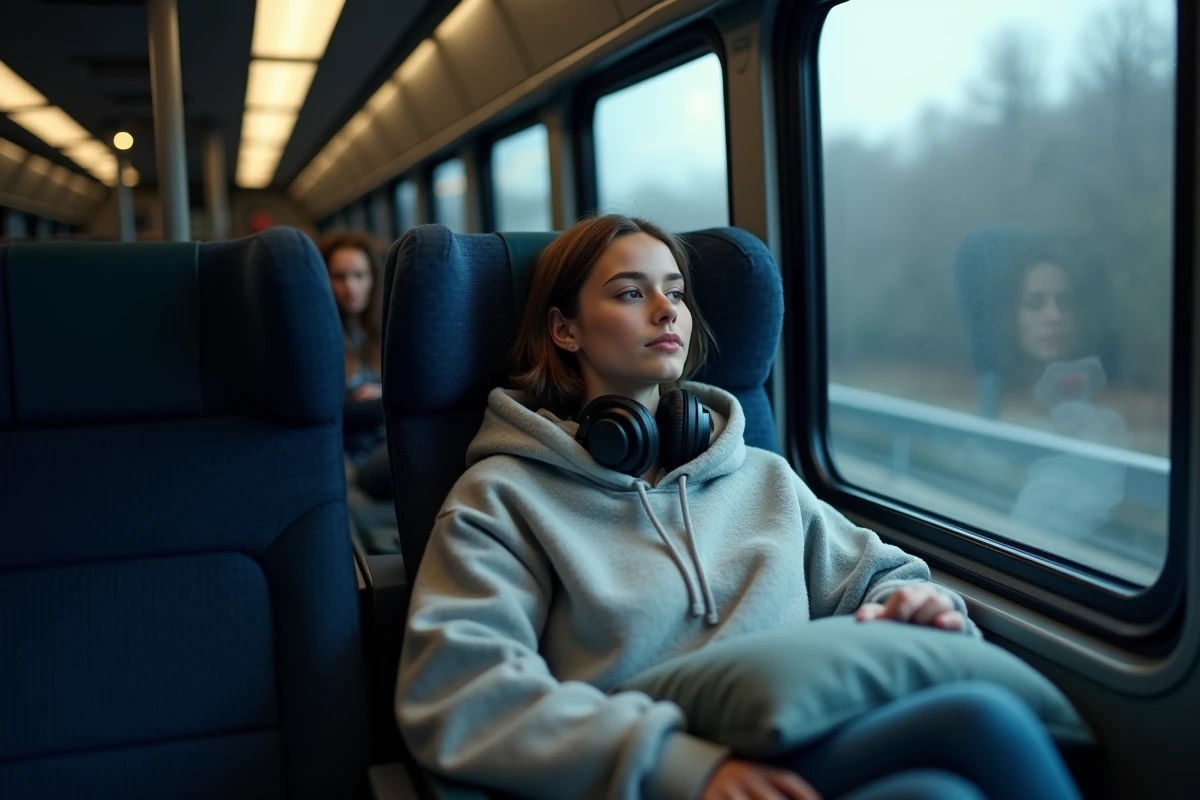
Taking a night bus to connect two French cities means accepting a simple deal: saving on the ticket and a night of accommodation in exchange for fragmented sleep in an inclined seat. BlaBlaCar Bus offers several night routes, including from Paris to Lyon, Bordeaux, or more distant destinations. Before booking, it’s best to know exactly what to expect on board.
Safety and Vigilance on a BlaBlaCar Night Bus
A rarely discussed aspect in comfort guides: safety during a night journey. In May 2026, a BlaBlaCar Bus driver made headlines in the regional press by stopping directly at a police station to drop off a passenger with problematic behavior. This initiative, praised as clever, reminds us that drivers play an active role in the safety of travelers.
Such episodes are isolated, but they contribute to an ambivalent image of the night bus. The journey is generally perceived as safe. However, traveling at night requires maintaining a few reflexes: keep your valuables in a bag within reach, stay alert during stops at the bus station, and don’t hesitate to report suspicious behavior to the driver.
If you’re looking for a detailed review on the subject, this review of the BlaBlaCar night bus accurately covers the reality of spending a full night on board.
Seat Comfort and Incline: What Really Changes the Journey
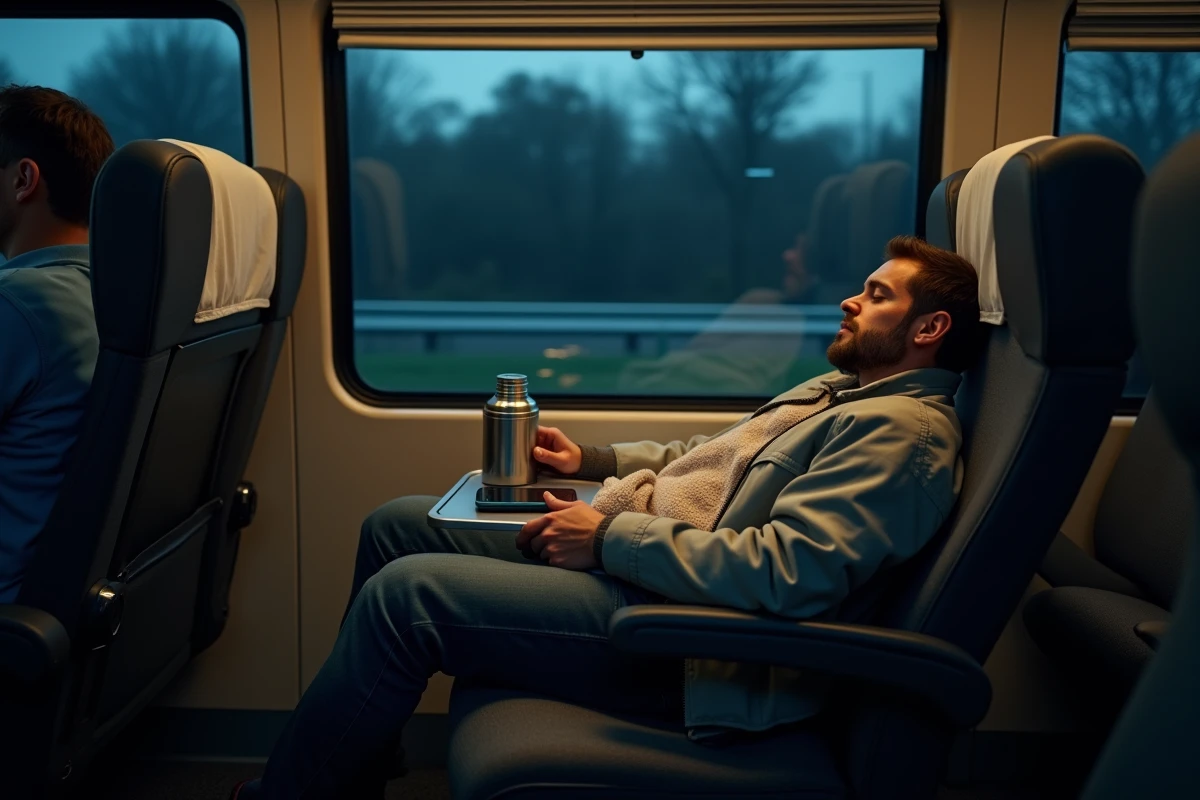
The question of sleep on a night bus often boils down to one variable: the seat. On BlaBlaCar Bus lines, the incline remains moderate. We’re not talking about a reclining position, but an angle sufficient to rest your head if you have the right equipment.
Window Side or Aisle Side
The window seat offers lateral support for the head, making it easier to fall asleep. The window serves as a resting surface, although the vibration of the glass can disturb light sleepers. The aisle seat provides more legroom but no head support.
Have you noticed that the seats in the middle of the bus move less? This is related to the suspension: the front and rear axles amplify the movements of the road. Choosing a seat between the two significantly reduces jolts.
What the Incline Doesn’t Compensate For
Even with the backrest fully reclined, the sitting position compresses the lower back after a few hours. A compact lumbar cushion radically changes the game on a journey longer than five hours. Without this accessory, waking up often comes with stiffness in the shoulders and hips.
Noise, Light, and Temperature: The Real Enemies of Sleep on the Bus
The hum of the engine is not the main problem. What truly fragments sleep are the stops at the bus station. At each stop, the interior lights come on, passengers get on or off, and the ambient noise rises for several minutes.
Air conditioning is another unpredictable variable. In summer, it can blow icy air that turns the journey into a trial if you haven’t planned for an extra layer. In winter, excessive heat dehydrates and makes waking up groggy.
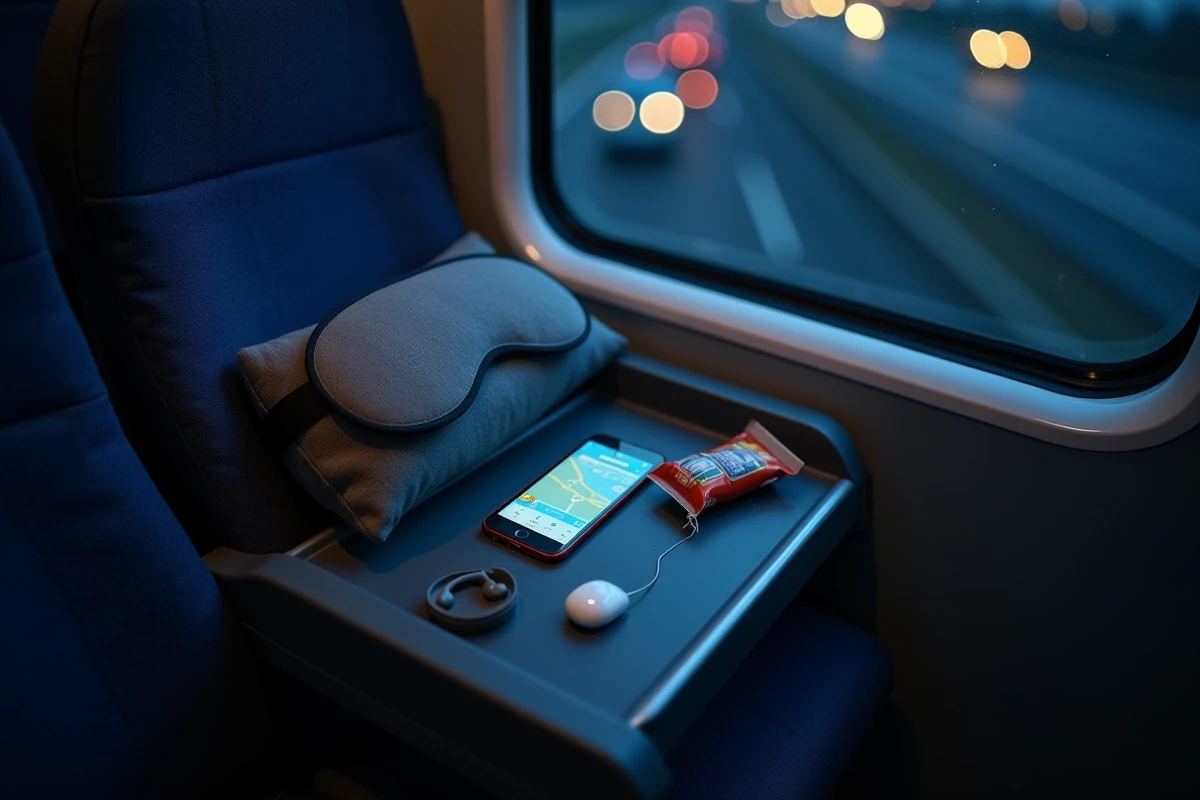
Here are the items to slip into your cabin baggage to counter these nuisances:
- Foam earplugs or noise-canceling headphones, which reduce both engine noise and sounds during stops
- An opaque sleep mask, ideally with contoured cups that don’t press on the eyelids
- A lightweight blanket or hoodie, more practical than a bulky blanket for regulating temperature
- A dry snack and a small bottle of water, as vending machines at the bus station are not always accessible at night
Choosing the Right BlaBlaCar Night Route in France
Not all night routes are created equal. A night journey that is too short doesn’t allow enough time to sleep: between boarding, settling in, and falling asleep, a three-hour trip will only offer you about an hour of real sleep, at best.
Long routes, such as Paris-Bordeaux or Paris-Lyon with connections to the south, allow for a more coherent block of sleep. Prefer departures late in the evening rather than early in the night: a late departure aligns the journey with your natural sleep rhythm.
Comparing the Night Bus to the Train
Night trains are returning on certain French routes, with sleeper cars that offer incomparable comfort. The bus remains significantly cheaper, and the connections are more numerous. The choice depends on your priority: budget or sleep quality. For a one-way trip on a common route, the bus ticket costs a fraction of the price of a train ticket, even when booked in advance.
Why choose the bus anyway? Because on many routes, the night train simply doesn’t exist. BlaBlaCar Bus covers routes that the SNCF no longer offers at night, making it sometimes the only land option for traveling without losing a day.
The overall rating for BlaBlaCar, across all offers, hovers around 4.7 out of 5 according to review platforms, with feedback highlighting attractive prices and a relaxed atmosphere. The most commonly cited irritants concern schedule unpredictability and the time needed to find the right route.
Sleeping on a BlaBlaCar night bus will never replace a real night of rest. The compromise works best when the journey lasts long enough to offer a real block of sleep and when you arrive equipped to neutralize noise, light, and cold. On a trip in France where budget matters, it’s a mode of transport that fulfills its role, as long as you don’t expect more than an inclined seat and a few hours of drowsiness.