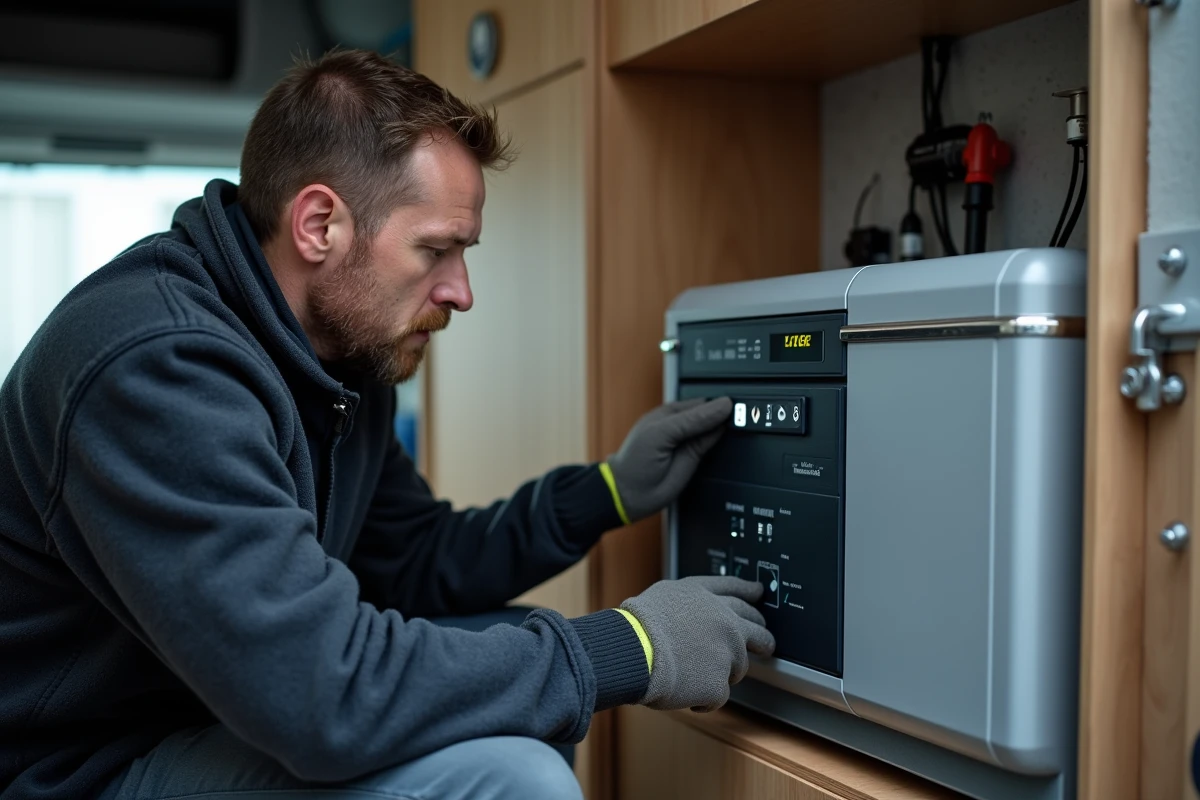
The Truma Combi control panel displays an error code, the heating refuses to start, and the temperature in the motorhome drops. Most van or motorhome owners have experienced this scenario at least once. The Truma Combi error codes indicate a specific malfunction, identifiable without specialized tools, provided you know how to read the signals the system sends.
Flashes and codes displayed on the CP Plus panel: two distinct languages
Before looking for the fault, you need to understand how the Truma Combi communicates. The system uses two different signaling modes depending on the control panel installed.
On a CP Plus panel (digital screen), the error code is displayed directly in the form of letters and numbers. The reading is immediate: E 124, E 110, or E 401 appear on the screen with a warning symbol.
On older analog panels, signaling is done through sequences of LED flashes. For example, three flashes followed by a pause correspond to a specific code, different from four flashes. This mode requires more attention, as you have to count the light pulses without making a mistake.
Consulting the list of Truma Combi error codes allows you to match each flashing sequence or each displayed code to an identified cause. Truma updates this documentation more frequently on its online knowledge base than in the paper manuals supplied with the device.
Truma Combi gas or diesel error codes: do not confuse the lists
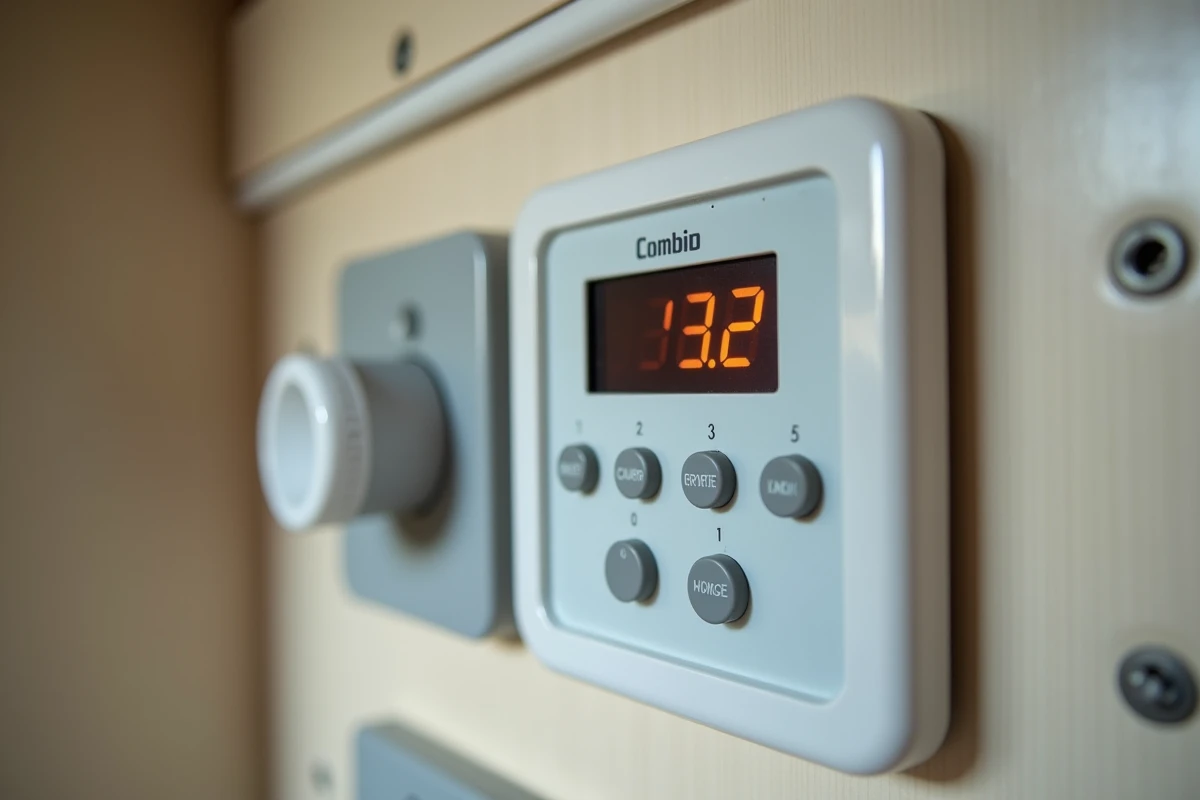
Do you have a Combi 4, a Combi 6, or a Combi 6E running on gas? The error codes do not cover the same causes as on a Diesel Combi (D4, D6, D4E, D6E), even when the code number is identical.
This distinction has been reinforced in Truma’s technical documentation since the introduction of the new generation Diesel Combis. Motorhome forums often share generic tables that mix the two families. A diagnosis based on the wrong table can lead to a component that is not at fault.
Before any fault-finding, check the exact model of your device. The identification label is located on the body of the heater, accessible by opening the maintenance hatch. It indicates the type of fuel and the precise reference of the Combi.
Three families of recurring faults on gas models
The most common error codes on gas Combis fall into three origins:
- Gas supply problem: the burner does not receive enough gas, the bottle is empty, the regulator is defective, or the valve is not fully open. The error code then indicates a flame failure or ignition failure.
- Fault in the electronic system or temperature sensor: the electronic board does not receive the correct information from the interior sensor. The heating may shut off for safety even if combustion is functioning.
- Insufficient battery voltage: the Combi needs a stable power supply to operate the fan, water pump, and control electronics. A voltage that is too low triggers a specific error code and prevents startup.
Battery voltage and power supply: the most underestimated fault
Among all the causes of error codes on a Truma Combi, a drop in the leisure battery voltage ranks as the top misdiagnosed fault. The heater consumes current for the fan motor, ignition system, and control panel electronics.
When the battery drops below a certain threshold, the system displays an error message related to the power supply. The usual reflex is to check the gas or suspect a mechanical problem. The battery is rarely the first component tested, whereas a simple check with a multimeter is sufficient.

Check the voltage before looking elsewhere
Measure the voltage at the terminals of the leisure battery, with the engine off and without mains connection. If the value is low, recharge the battery and restart the Combi. In most cases, the error code disappears after a full recharge.
Another common pitfall: oxidized electrical connections between the battery and the Combi. On a vehicle several years old, the terminals and connections can corrode. A poor contact generates an intermittent voltage drop that triggers random error codes.
Resetting a Truma Combi error code without workshop intervention
Some error codes persist on the screen even after the problem has been resolved. This does not mean that the fault is still present. The CP Plus panel retains the last error code in memory until a reset is performed.
The procedure varies depending on the control panel. On a CP Plus, it usually suffices to turn off the system, wait a few seconds, and then turn it back on. If the code reappears, the cause has not been resolved.
On older models with LEDs, disconnecting the power supply to the Combi for one to two minutes allows you to clear the error memory. Reconnect, then observe the behavior upon restart.
When to contact a certified Truma technician
Two situations justify professional intervention:
- The error code consistently returns after each reset, even after checking the gas, battery voltage, and electrical connections.
- The code concerns an internal component of the heating unit (electronic board, overheating probe, fan motor) whose replacement requires partial disassembly of the device.
European regulations require that the installation and repair of combustion heating devices in recreational vehicles be carried out by a specialist. Intervening on the gas circuit or the burner without qualification exposes you to risks of leaks or carbon monoxide poisoning.
A Truma Combi error code is not a definitive sentence. Most common codes point to simple causes (power supply, gas, battery) that any owner can check before making an appointment in the workshop. Correctly identifying the Combi model, distinguishing between gas and diesel lists, and checking the battery voltage first: these three reflexes resolve the vast majority of situations.