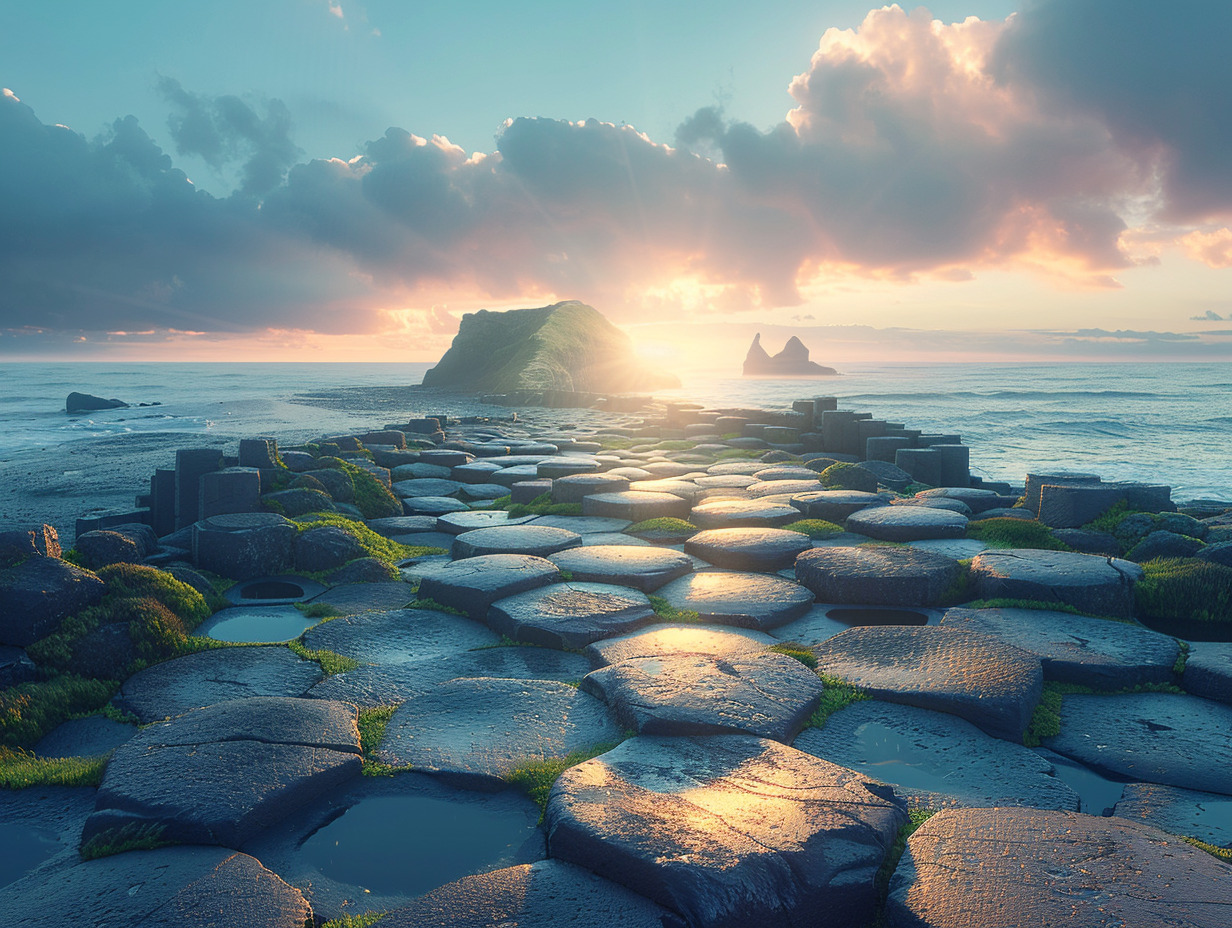
Our planet is teeming with natural formations of breathtaking beauty, shaped by geological forces over millions of years. From the symmetrical basalt columns of the Giant’s Causeway in Northern Ireland to the red sandstone waves of Antelope Canyon in the United States, these wonders testify to the incredible creativity of nature. They invite reflection on time and the processes that sculpted them. Whether it’s the vast crystal caves in Mexico or the rocky spurs of Zhangjiajie National Park in China, each formation offers a unique window into the Earth’s history.
Exploring the Wonders of Natural Architecture
In the ancient quest for greatness, the Seven Wonders of the World stand as an indelible legacy of the ancient world. These structures, from the pyramid to the statue, embody the excellence of architecture and humanity’s mastery over matter. The history of their construction remains an eloquent testament to human ingenuity, from the Pharos of Alexandria to the Temple of Artemis at Ephesus. Each one is a response to its environment and the challenges of its time.
The Pyramids of Giza, the only remnant of the wonders of the ancient world, continue to fascinate and inspire, while the Hanging Gardens of Babylon remain shrouded in mystery, their very existence subject to debate. The tragic fates of the Mausoleum at Halicarnassus and the Colossus of Rhodes, ravaged by earthquakes, remind us of the fragility of human works in the face of nature’s whims.
Like the creations of antiquity, natural wonders such as the dome of La Lauze or the basalt columns of the Giant’s Causeway reveal themselves as living sculptures, shaped by the elements and time. These formations, far from being mere geological curiosities, reflect an architecture without an architect, where each layer, each erosion tells a millennia-old story.
Be aware of the preciousness of these natural jewels and the necessity to preserve them. The Statue of Zeus at Olympia, lost to flames, and the Temple of Artemis, consumed by fire, teach us the urgency of protecting these sites against current threats. Like the Pharos of Alexandria, submerged by waters, these natural architectural wonders could one day disappear, taking with them pages of our shared history.
Diversity and Preservation of Natural Wonders
Alongside monuments shaped by human ingenuity, nature unfolds its own masterpieces, often inscribed on the UNESCO World Heritage List. From the snow-capped peaks of Machu Picchu in Peru to the sacred banks of the Taj Mahal in India, these sites combine natural beauty and cultural prowess. The Great Wall of China, winding over thousands of kilometers, and the pyramidal complex of Chichén Itzá in Mexico are testimonies of the intimate dialogue between humanity and its environment.
The echo of the ancient approach is found in contemporary initiatives by the New Seven Wonders Foundation, founded by Bernard Weber, which has successfully revitalized the spirit of the Seven Wonders by establishing lists of remarkable sites. The New Seven Wonders of the World and the Seven Wonders of Nature were selected through global popular mobilization, highlighting the deep connection between humanity and its achievements and the spectacles offered by nature.
However, beware, for these wonders are threatened. Rampant urbanization, climate change, and mass tourism weigh heavily on their sustainability. Initiatives such as those by UNESCO and various national parks are crucial for the conservation of these sites. Preserving these wonders, whether they are the work of nature or of vanished civilizations, is a major issue for collective memory and the legacy we will leave to future generations.